
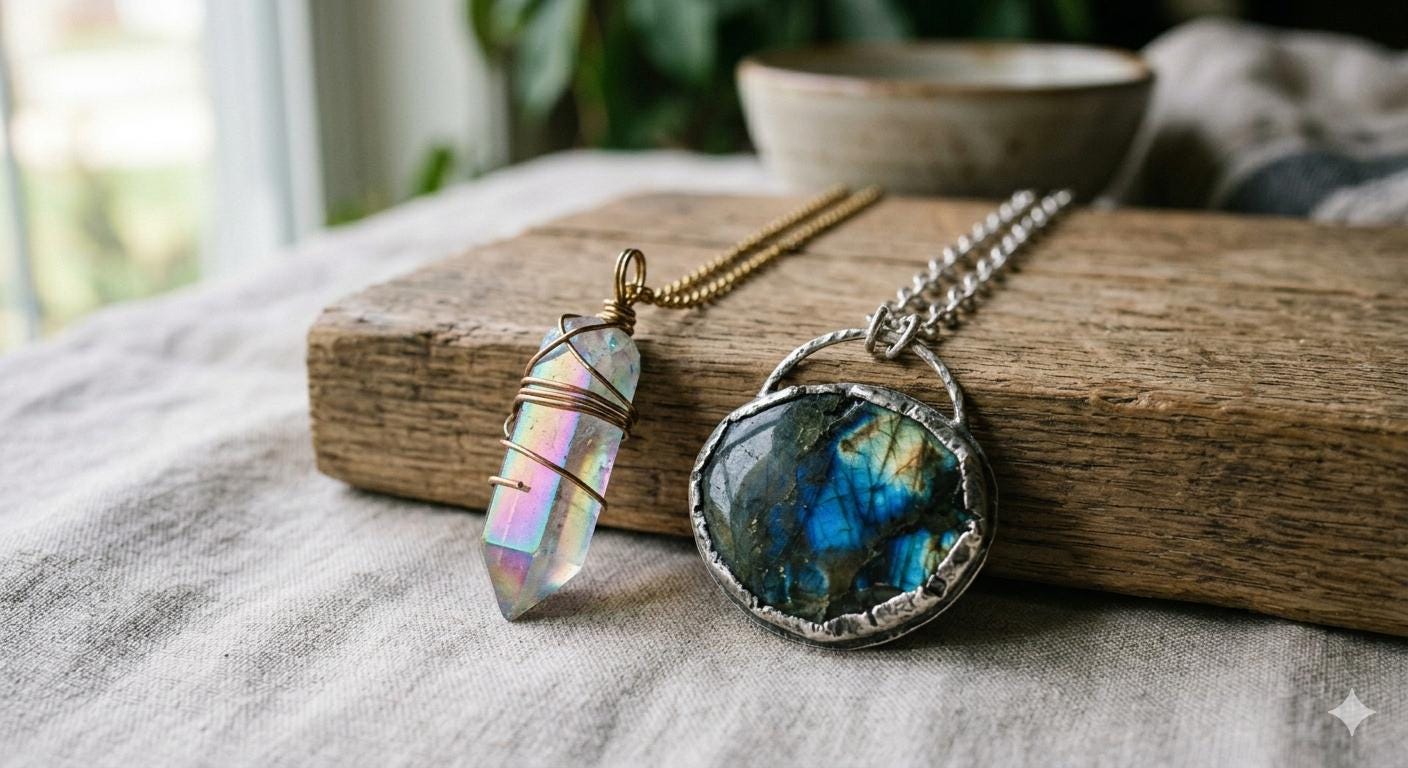
Kia ora - you can feel the difference before you even have words for it. One piece lands in your hands with weight, texture and a sense of presence. Another arrives glossy and forgettable, made to fill a trend, worn a handful of times, then left tangled in a drawer. That is often the difference between authenticity and quick fashion.For those of us drawn to jewellery as more than decoration, this distinction matters. A necklace can be an anchor, a gift, a reminder of a season of life, or a Taonga carried close to the chest. When something is made with intention, it tends to stay with you. When it is made for speed alone, it tends to pass through your life just as quickly.
What the difference between authenticity and quick fashion really means
At its simplest, quick fashion is built for pace. It follows the rush of trends, produces at scale, and asks one main question - how fast can this be made and sold? The goal is not usually longevity, emotional connection or craft. It is turnover.Authenticity works from a different centre. It asks where the materials come from, who made the piece, why the design looks the way it does, and whether it has the depth to be worn for years rather than weeks. In artisan jewellery, authenticity often shows up in small things: the natural lines of a stone being honoured instead of cut into sameness, the maker allowing for irregular beauty, the feeling that the piece was created rather than simply manufactured.That does not mean every affordable item is hollow, or that every handmade piece is automatically meaningful. Price alone is not proof of soul. But authenticity usually leaves a trail you can follow - a real maker, a real process, real materials, and a reason the piece exists beyond a passing trend.
Quick fashion sells a look. Authenticity offers a connection.
Quick fashion is very good at creating urgency. It tells you this colour, this chain, this crystal shape, this season's look is the one to have right now. It thrives on fear of missing out. The piece is often less about you and more about keeping up.Authentic jewellery tends to move more quietly. Instead of shouting for attention, it invites recognition. You choose it because it feels like you, or because it marks a memory, an intention, a person you love. A hand-bound crystal pendant, for example, may speak to someone not just because it suits an outfit, but because the stone carries grounding energy, or because it reminds them of rugged shorelines, open skies and a steadier way of being.That emotional bond is not a marketing trick. It changes how we care for what we own. We polish it, repair it, gift it with thought, and keep it close. A piece with connection becomes part of your story.
Why story matters in jewellery
Jewellery has always held meaning beyond surface beauty. We wear rings for devotion, pendants for protection, stones for remembrance and adornment for identity. When a piece has a story, it gathers value over time.Quick fashion often copies the outer symbols of meaning while stripping out the depth. You might see a crystal motif used because it is trendy, not because there is any respect for the material, its source or its significance. Authenticity gives the story back. It makes room for the stone to be itself, and for the wearer to bring their own intention to it.
Materials, making and the human hand
One of the clearest signs of the difference between authenticity and quick fashion is how a piece is made. Quick fashion depends on repetition and standardisation. Designs are replicated in large batches. Materials may be chosen because they are cheap, convenient or visually close enough. The result can look polished at first glance, but often lacks durability and character.Authentic artisan work is shaped by the human hand. That matters more than many people realise. Handmade does not mean perfect in the factory sense. It means considered. It means a maker has responded to the natural form of a stone, adjusted tension, balance and detail, and made choices that machines do not make with care.In crystal and custom jewellery, this is especially important. No two stones are exactly alike. Jasper has its own grounding depth. Quartz catches light in its own way. Pounamu carries profound cultural and spiritual significance and deserves to be treated with reverence, not trend-driven casualness. Authentic making respects the individuality of the material rather than forcing everything into uniformity.
The trade-off people do not always talk about
Quick fashion is often easier to access. It is fast, familiar and usually cheaper upfront. For someone wanting a fun piece for one event, that may feel good enough.Authentic jewellery usually asks more of you at the start. It may cost more. It may take longer to make. You may need to wait for a custom piece or choose with more intention. But that slower path is often where the value lives. You are not only paying for an object. You are supporting time, skill, materials, and a way of making that does not treat beauty as disposable.
How authenticity feels to the wearer
There is a practical side to authenticity, and there is an emotional one. Practically, well-made pieces often last longer and wear better. Emotionally, they sit differently on the body. They feel chosen rather than random.Many people in our community are not shopping for accessories in the usual sense. They are searching for a gift with heart, a stone with a certain energy, or something that feels like a companion on the road. That is where authenticity matters most. A meaningful piece can become part of daily ritual - touched during stressful moments, worn for courage, gifted as protection, carried as a reminder of home.Quick fashion rarely holds that kind of presence because it was never made to. Its job is visual novelty. Once the novelty fades, the relationship often ends.
Signs you are choosing authenticity over quick fashion
If you are wondering what to look for, start with the maker. Can you sense a real person behind the piece? Is there care in how the work is described? Are the materials spoken about with respect rather than hype?Then look at the design. Does it seem copied from a trend cycle, or shaped with its own point of view? Are natural variations treated as beauty, not flaws? Is there transparency around handmade work, custom options or the meaning behind the piece?Finally, ask yourself a quieter question: would you still want this when the trend passes? If the answer is yes, you are probably closer to authenticity.At The Enchanted Gem Grotto, that difference lives in the making. Each piece is approached as Taonga, not throwaway ornament - something to carry a little of the earth's magic and a little of your own journey too.
The deeper cost of quick fashion
There is also a broader human cost to all this. Quick fashion trains us to consume without attachment. It teaches us that style should be constant, cheap and endlessly replaced. Over time, that can dull our relationship with the objects we keep close.Authenticity asks us to return to discernment. To buy less, perhaps, but choose better. To see beauty not as endless novelty but as resonance. To value the maker, the material and the meaning woven between them.This shift does not need to be rigid or self-righteous. Not every purchase must carry spiritual depth. Sometimes adornment can simply be playful. But when jewellery is tied to memory, gifting, healing intention or identity, authenticity becomes more than a nice idea. It becomes the very thing that makes the piece worth having.A well-chosen necklace or crystal pendant can travel with you through seasons of change, across cities, coastlines and countries, and still feel true. That kind of staying power is rare in a culture built on speed.So when you are deciding what belongs in your collection, look beyond the trend. Notice what feels alive, what feels grounded, what seems to have been made with care rather than churned out for the next rush. The right piece will not just match your wardrobe - it will meet you where you are, and stay meaningful long after the moment has passed.